
Active Warrants in Hinds County
Warrants in Hinds County come from several courts, not one central office. A judge or magistrate signs the order, and the Hinds County Sheriff's Office or a city police department carries it out. Felony warrants tend to trace back to Circuit Court. Misdemeanor and traffic warrants usually start in Justice Court or a municipal court. Because each court keeps its own files, there is no single screen that lists every active warrant in the county. The official county and court pages reviewed for this area do not publish a standalone public active-warrant search.
Warrant status still surfaces in two public places. The county jail portal shows warrant number fields once a person has been booked. The state's electronic court system, Mississippi Electronic Courts, carries case flags such as Bench Warrant Issued and Capias Pending. Neither source is a complete list of open warrants. The jail portal only reflects people already in custody, and court flags only appear on cases that have reached an electronic file. Treat both as partial views, then confirm anything important by phone with the court or the sheriff.
Types of Hinds County Warrants
Not every warrant means the same thing. The label tells you who issued it and why, which in turn tells you where to call. A handful of types drive most Hinds County warrant questions, and the difference between them matters when you try to clear one.
- Arrest warrant - Signed when there is probable cause to believe a person committed a crime, allowing police to arrest on sight.
- Bench warrant - Issued by a judge from the bench, most often after a missed court date or an unpaid fine.
- Capias - A court order to take a person into custody, frequently tied to a failure to appear or to answer a charge.
- Search warrant - Authorizes officers to search a place or property, and is not a command to arrest a person.
- Indictment warrant - Follows a grand jury indictment in a felony case and routes through Circuit Court.
How to Check for a Hinds County Warrant
The smart first move is to figure out which court issued the warrant. Look at the citation, the bond paperwork, or any case notice you already have. The issuing court name points you to the right phone line and the right clerk. Guess wrong and you waste a trip downtown.
If the person may already be in jail, start with the county inmate portal. After booking, an inmate profile lists each charge along with a warrant number field, the arresting agency, and the arrest date. That tool covers current Hinds County inmates only, so it will not show a warrant for someone still at large. For booking detail and a fuller look at custody status, the county inmate search page is the better stop, and the Hinds County inmate records guide walks through how that roster works.
For cases already in the court system, check the electronic court files. Seventh Circuit MEC case records carry flags like Bench Warrant Issued, Bench Warrant Returned, and Capias Pending, which signal that a judge has ordered an arrest or that a capias is open. Public document access through MEC may require an account and fees. The flags themselves tell you a warrant exists even before you open a document.
Most everyday warrants live at the lower court that signed them. Bench warrants for missed court, traffic failures to appear, or unpaid fines are held by Hinds County Justice Court or by the municipal court named on the citation. The City of Jackson Municipal Court and the Clinton Municipal Court handle their own city cases. Call the issuing court before you show up, because each one runs its own docket and bond process.
When online tools come up empty, go direct. Call the issuing court clerk or the Hinds County Sheriff's Office to confirm whether a warrant is active and how to clear it. For records not posted online, the county public records request form is the written fallback, though active, sealed, and juvenile warrants may be withheld. Mississippi has no confirmed simple statewide warrant search, so there is no single state website that lists every open warrant.
What a Hinds County Warrant Record Shows
When a warrant connects to a booked charge, the detail that shows up comes mostly from the jail profile and the linked court case. A jail charge section pairs each count with its own warrant and indictment fields. The table below lists the fields documented on Hinds County inmate profiles and court records that bear on warrants.
| Field | What It Shows |
|---|---|
| Warrant # | The identifier tied to a specific charge on an inmate's booking profile. |
| Charge Name | The offense the warrant or booking charge is based on. |
| Felony / Misdemeanor | A field marking the severity level of each charge. |
| Indictment # | The number for a grand jury indictment when the charge has been indicted. |
| Arresting Agency | The law enforcement agency that made the arrest or holds the warrant. |
| Arrest Date | The date the person was taken into custody. |
| Location | The current holding location or pod code after booking, such as RDC. |
| MEC Warrant Flags | Court file flags like Bench Warrant Issued or Capias Pending that mark warrant status. |
Note: The county inmate portal warns that its data changes quickly, reflects current arrests only, is not proof of conviction, and should not be relied on for legal action.
Resolving an Outstanding Warrant
An open warrant does not go away on its own. It can surface at a traffic stop, an airport, or a routine background check, often at the worst time. Handling it on your own terms is almost always better than waiting to be picked up. The steps below follow the order most Hinds County situations call for.
- Identify the issuing court, whether municipal, justice, county, circuit, chancery, or an MDOC-related warrant. The court that signed the order controls how it clears.
- Do not rely only on the inmate portal unless the person is already in Hinds County custody, since it will not confirm a warrant for someone still free.
- Call the court clerk or the sheriff to confirm the warrant is active and to ask what bond or appearance the court requires.
- If the warrant came from a missed court date, ask whether the court allows a reset, a bond posting, a walk-in docket, or an appearance by your attorney.
- If the warrant ties to a felony indictment, contact a lawyer and the Circuit Clerk or Circuit Court rather than appearing at the wrong lower court.
- After the matter is resolved, confirm how long clearance takes and whether other agencies need an updated order.
Important: Talk with a lawyer before you surrender on a warrant, especially a felony, so you understand the charge, the likely bond, and your options before you walk in.
MEC Warrant and Capias Flags
Mississippi Electronic Courts uses short status flags to track where a case stands. Several of them deal directly with warrants and capias orders. Seeing one on a Seventh Circuit case file tells you a judge has acted, even if you cannot open the underlying document. The full case file behind a flag lives in the Hinds County criminal court records, while the plain-English column below explains what each flag signals.
| Flag | Plain-English Meaning |
|---|---|
| Bench Warrant Issued | A judge has ordered the person's arrest, often after a missed hearing or a violated condition. |
| Bench Warrant Returned | The bench warrant has been served or otherwise resolved and returned to the court. |
| Capias Pending | A capias, which is a court order to take the person into custody, is open on the case. |
| MDOC Warrant Issued | A warrant tied to the Mississippi Department of Corrections, usually involving supervision or custody, has been issued. |
County Warrants vs Federal Warrants
A warrant from the Hinds County Sheriff or a city court is a state or local matter. Federal warrants are different. They come from the U.S. District Court for the Southern District of Mississippi and are handled by federal agencies such as the U.S. Marshals. A federal warrant will not appear in the county jail portal or in MEC, because those systems track state and local cases only.
Federal cases, including federal warrants and indictments, are tracked through the federal court system. The federal Public Access to Court Electronic Records service, known as PACER, is the official way to search those dockets.

A PACER account may carry per-page fees, and a federal matter usually leaves no Hinds County court file unless related state charges also exist.
Appeals from the federal district court in Jackson move up to the U.S. Court of Appeals for the Fifth Circuit, a separate court from any Hinds County venue.
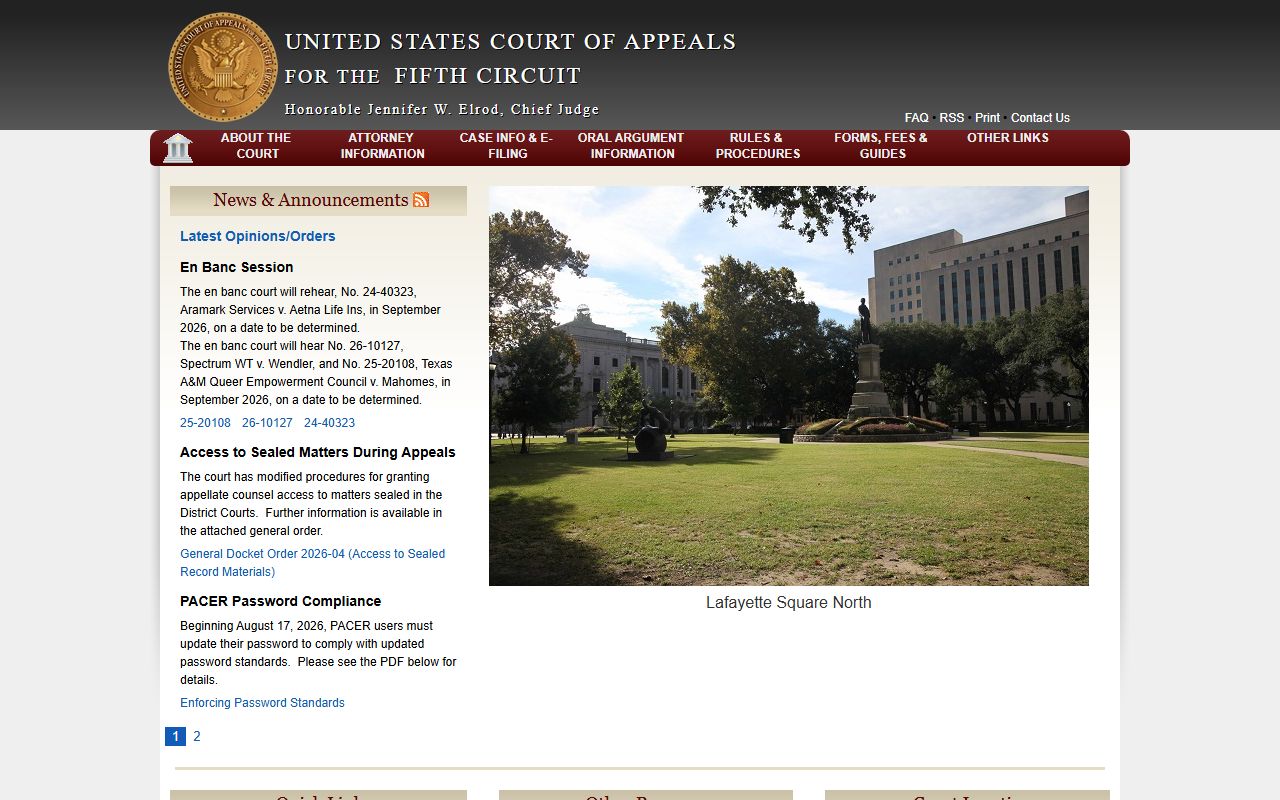
Knowing this split matters. A person facing a federal warrant clears it through federal court and the U.S. Marshals, not through the county sheriff or a local clerk.
Statewide Searches and the Registry
There is no confirmed statewide website that lists every open Mississippi warrant. People sometimes expect one, then assume a clean search means no warrant exists. That assumption is risky. The closest statewide tools serve narrower purposes and do not function as a warrant list.
One statewide resource that often gets grouped with warrant searches is the Mississippi Department of Public Safety sex-offender registry, which is a public safety database rather than a warrant tool.
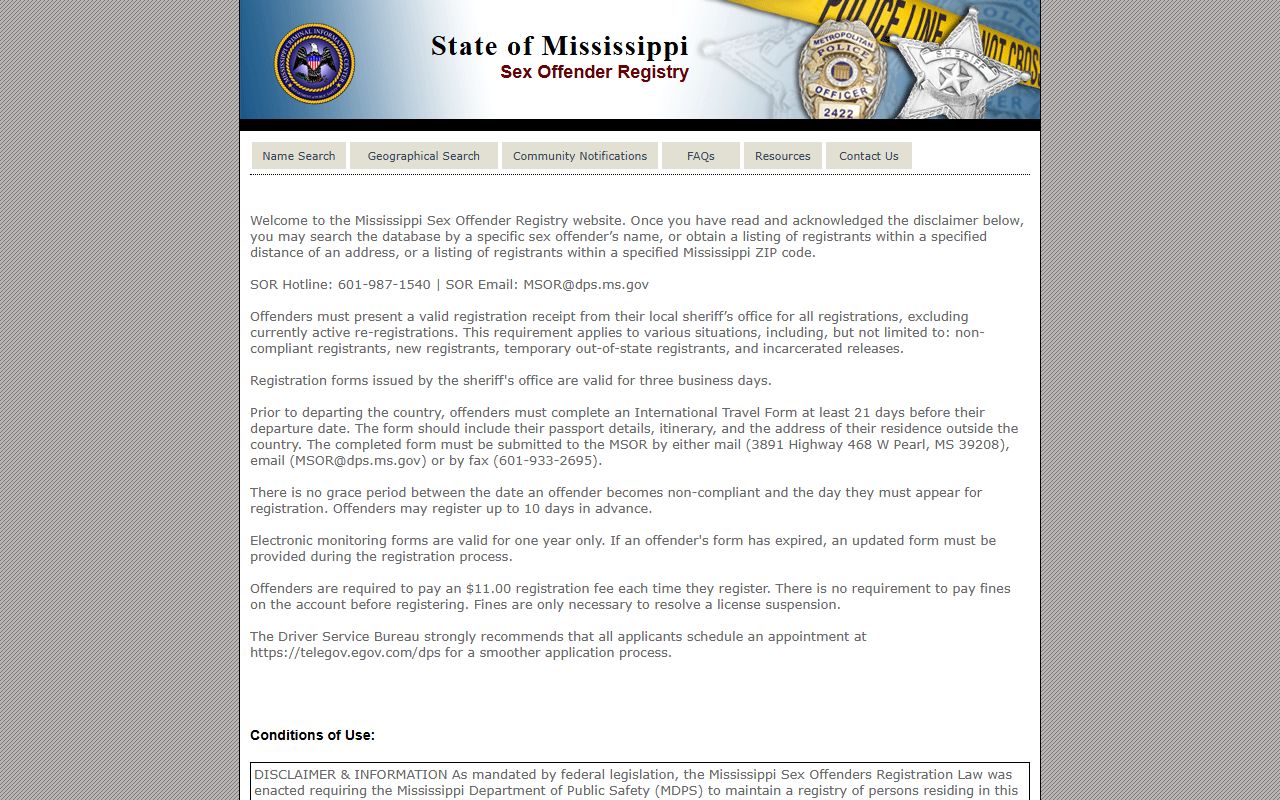
It tells you whether a person is a registered offender, but it does not confirm an active warrant, so it is no substitute for calling the issuing court. For people already in state prison, the Mississippi Department of Corrections inmate search is the right lookup, though it covers sentenced state prisoners, not county warrants.
Note: A statewide registry or inmate search can confirm separate facts, but none of them replaces a direct call to the court that issued the warrant.
Restricted Hinds County Warrant Records
Not every warrant is open to public view. Sealed warrants, juvenile matters, and active investigations are commonly withheld so a search does not tip off a suspect. Youth Court records in particular are confidential under Miss. Code Ann. Section 43-21-261 and do not appear in ordinary searches.
Expect limits even on records that are partly public. A public records request can be denied for active warrants, sealed files, or ongoing investigations. Personal identifiers such as Social Security numbers may be redacted. When a search shows nothing, that can mean no warrant, or it can mean the record is simply restricted. Confirm with the court before you rely on a blank result, especially when a job, a bond, or a court date is on the line.